Freight Safety
How to Spot Double Brokers Using FMCSA Data
5 warning signs every freight broker should check before booking a load — all visible in FMCSA data.
Practical guides for freight brokers, shippers, and dispatchers. Written by King Dispatch LLC.
The complete step-by-step process professional freight brokers use to verify any US motor carrier — authority, insurance, fleet, contacts, and red flags.
5 warning signs every freight broker should check before booking a load — all visible in FMCSA data.

Side-by-side comparison. Same FMCSA data, no $100/month subscription required.
Compare the top free FMCSA carrier verification tools — no subscriptions required.
Get carrier authority, insurance, and safety data as DAT CarrierWatch — completely free.

Tired of SAFER Web's slow interface? CarrierCheck shows all FMCSA data on one clean page.

Every commercial carrier gets a USDOT number. Here's what it is, who needs one, and what it reveals about a carrier.
Read →Active authority is the legal permission to haul freight for hire. Learn exactly how to check it and what the status means.
Read →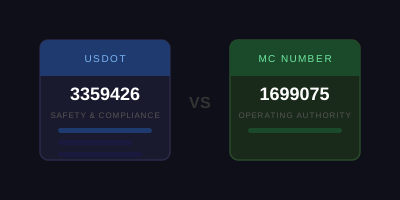
Both identify carriers but serve different purposes. Learn when to use each one and why both matter when vetting.
Read →
Experienced brokers know what warning signs to look for. Here are the 7 biggest red flags that should make you think twice.
Read →
Satisfactory, Conditional, Unsatisfactory — what do these ratings mean and how should they affect your carrier decisions?
Read →Not all cargo insurance is equal. Learn coverage types, federal minimums, and how to verify a carrier's insurance is real.
Read →Fake brokers, double brokering, carrier identity theft — learn the warning signs and how to protect your freight and business.
Read →Everything you need to know about the FMCSA database — what data it contains, how to search it, and how to interpret results.
Read →
Inactive authority means a carrier is no longer legally authorized to haul. Learn why it happens and why it's a hard disqualifier.
Read →
Active authority is necessary but not sufficient. Learn what else to check beyond just the status when vetting a carrier.
Read →Double brokering costs the industry millions yearly. Learn how the schemes work, the legal risks involved, and how to protect your brokerage step by step.
Read →Unsatisfactory ratings, high OOS rates, no insurance, recent authority changes — learn the safety score red flags every broker needs to know.
Read →The complete vetting process, checklist, free tools, common mistakes, and how to automate at scale. Everything a broker needs in one guide.
Read →Upload a CSV of MC or DOT numbers and get FMCSA data for every carrier in minutes — free bulk lookup tool, no subscription needed.
Read →How to verify a carrier's insurance is real, current, and sufficient — BIPD, cargo, surety bond, and HazMat coverage explained.
Read →Authority, insurance, safety rating, inspections, authority age, and fleet size — the 6 components of a complete carrier risk profile.
Read →What each of the 7 BASIC categories measures, what alert thresholds mean, and how to use BASIC scores in your carrier vetting process.
Read →What a USDOT lookup returns, where to search, how to read the results, and what red flags to watch for — complete guide.
Read →The top 10 largest US trucking companies ranked by fleet size, how the industry is structured, and what FMCSA data tells you about them.
Read →How to search the FMCSA database by USDOT number, MC number, or company name — what results show, common pitfalls, and a faster free alternative.
Read →Double brokering is freight fraud — a carrier re-brokers your load without consent, leaving you liable. Learn the red flags and how to protect your shipments.
Read →
New authority carriers are statistically higher risk. Learn the red flags, enhanced vetting checklist, and when it's safe to book them.
Read →How fraudsters use real and stolen MC numbers to steal loads — and the verification checklist that catches them every time.
Read →Out-of-service rates are the most actionable safety signal for most carriers. Learn the national averages and when OOS rates should disqualify a carrier.
Read →Use our free FMCSA lookup tool — instant results, no sign up required.
Search a Carrier →